


B.E. - Civil Engineering

DEPARTMENT OVERVIEW
The Department of Civil Engineering was established in the year 2008 with an intake of 60 and over a short period of time due to remarkable efforts of the Management, Faculty and active students an increase of intake from 60 to 120 was achieved. Surge in the Academic, Curricular, Co and Extra Curricular activities resulted in higher success rate with several ranks from the VTU, increased the placements and the cream of the students landed abroad in top universities. Knowing the need of a master degree course and on the confidence in the performance of the Department, M.Tech in Structural Engineering was started in the year 2013 with an intake of 30. Another milestone was achieved by the Department in order to develop and encourage the research needs in Civil Engineering and in the year 2014. The Department was recognised as a research Center leading to Ph. D from VTU Belagavi and this research culture enabled several research scholars to register for the Ph. D, and more than 200 technical papers have been published in reputed journals, by staff and students
VISION AND MISSION
VISION
The Department aims in providing the state of art facilities to the students and transform them into professionals to take up challenges in diversified fields of Civil Engineering, adapt to the ever changing needs of the society and respect humanity
MISSION
To develop the department as a conducive center for teaching & learning and promote quality education, practical training, encourage research, inculcate moral and ethical values, lifelong learning needs.
To motivate the students to take up higher education, entrepreneurship and promote global professionalism.
To encourage contemporary issues and to contribute to societal needs.
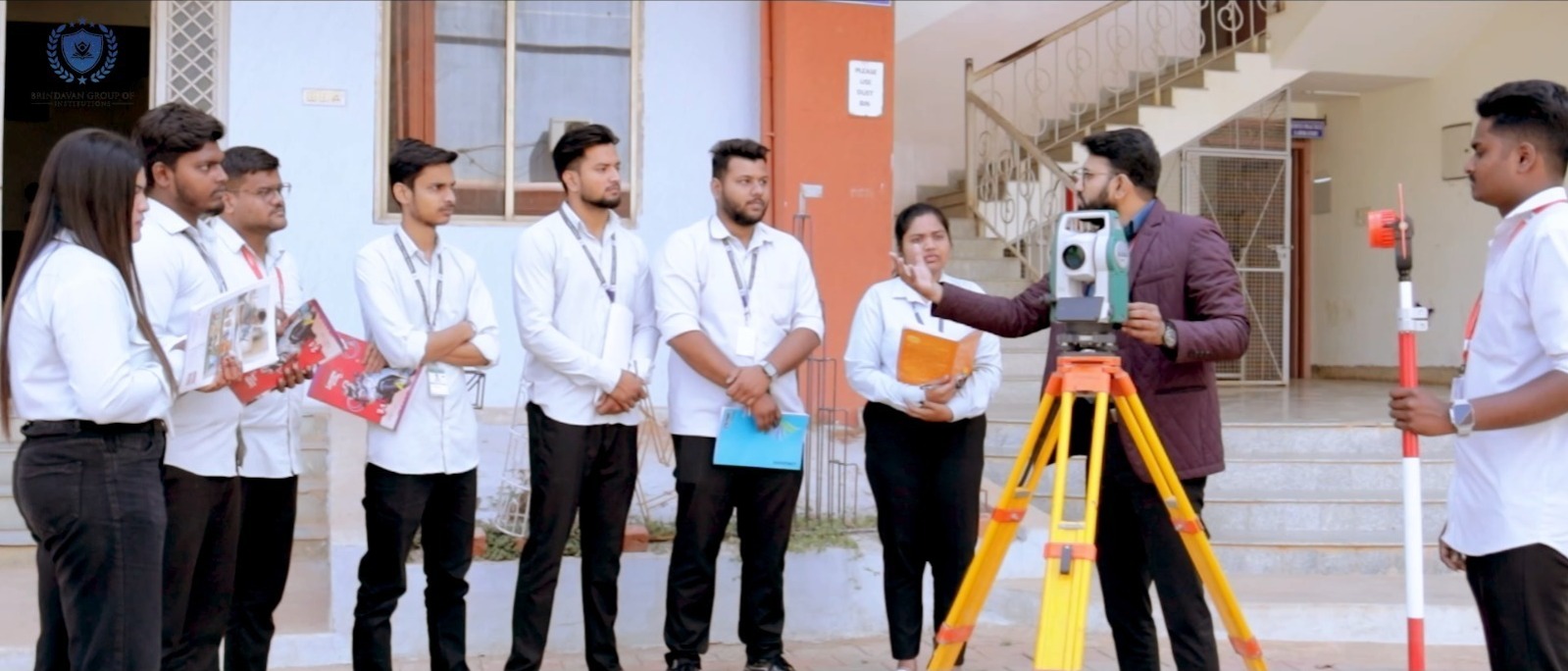
Salient Features
Shaping Tomorrow, Today

Proctor Mentoring System is active to address the slow learners as well as to counsel the students grievances in academic aspects

Alumni Social Media Group is active to exchange their views, give necessary inputs and share their ideas to create Job opportunities

Involve in Institutional Social Responsibility activities.
We inculcate knowledge among the students for the overall personality development with professional ethics and universal human values.
The Department has a Library, which consists of 168 titles with 210 Volumes of Books and journals.
POs are statements that describe what students are expected to know and be able to do upon graduating from the program. These relate to the skills, knowledge, analytical ability attitude and behaviour that students acquire through the program.
DEPARTMENT LABORATORIES

Building Materials Testing Laboratory

Computer Building Planning & Drawing
Engineering Geology Laboratory
Geotechnical Engineering Laboratory

Concrete & Highway Materials Testing Laboratory.

Surveying Laboratory
Environmental Engineering Laboratory

Fluid Mechanics & Hydraulic Machines Laboratory
INFRASTRUCTURE
Apart from the well planned and well maintained infrastructure of the institution. The department has hi-tech amenities like well-ventilated large classrooms with Wi-Fi facilities, Seminar halls, conference hall, canteen facility and highly equipped laboratories.
PROGRAM SPECIFIC OUTCOMES
To apply the principles of mathematics, science and civil engineering in solving problems related to analysis and design of Structures, Transportation systems, Geo-technical Engineering, Water resources and Environmental Engineering
To uphold the ethical principles in their professional ventures and humanitarian concern in all walks of life
Function as an individual, member or as a leader in design and construction and effectively manage the financial and human resources.
3rd to 8th Semester BE – Civil Engineering Scheme of Teaching and Examinations Outcome Based Education (OBE) and Choice Based Credit System (CBCS) (Effective from the academic year 2018 – 19)
Course Structure
Download
ELIGIBILITY


Course Outcomes (CO’s)
1. COURSE OUTCOME FOR 21 SCHEME
| Subject Code | Course Outcomes (CO’s) |
|---|---|
| 21MAT31 | 1.To solve ordinary differential equations using Laplace transform. 2.Demonstrate the Fourier series to study the behavior of periodic functions and their applications in system communications, digital signal processing and field theory. 3.To use Fourier transforms to Analyze problems involving continuous-time signals and to apply Z-Transform techniques to solve difference equations 4.To solve mathematical models represented by initial or boundary value problems involving partial differential equations. 5.Determine the externals of functional using calculus of variations and solve problems arising in dynamics of rigid bodies and vibrational analysis. |
| 21CV32 | 1. Execute survey using compass and plane table. 2. Find the level of ground surface and Calculation of area and volumes 3. Operate theodolite for field execution 4. Estimate the capacity of reservoir 5. Interpret satellite imageries |
| 21CV33 | 1.Evaluate the behavior when a solid material is subjected to various types of forces (namely Compressive, Tensile, Thermal, Shear, flexure, Torque, internal fluid pressure) and estimate stresses and corresponding strain developed. 2. Estimate the forces developed and draw a schematic diagram for stresses, forces, moments for simple beams with different types of support and are subjected to various types of loads . 3. Evaluate the behavior when a solid material is subjected to Torque and internal fluid pressure and estimate stresses and corresponding strain developed. 4. Distinguish the behavior of short and long column and calculate load at failure & explain the behavior of spring to estimate deflection and stiffness 5.Examine and Evaluate the mechanical properties of various materials under different loading conditions |
| 21CV34 | 1.Apply geological knowledge in different civil engineering practices. 2. Students will acquire knowledge on durability and competence of foundation rocks, and Confidence enough to use the best building materials. 3. competent enough to provide services for the safety, stability, economy and life of the structures that they construct . 4. Able to solve various issues related to ground water exploration, build up dams, bridges, tunnels which are often confronted with ground water problems . 5. Intelligent enough to apply GIS, GPS and remote sensing as a latest tool in different civil engineering for safe and solid construction. |
| 21CV35 | 1. Prepare, read and interpret the drawings in a professional set up. 2. Know the procedures of submission of drawings and Develop working and submission drawings for building. 3. Plan and design of residential or public building as per the given requirements |
| 21CV381 | 1. Understand Python syntax and semantics and be fluent in the use of Python flow control and functions. 2. Demonstrate proficiency in handling Strings and File Systems. 3. Represent compound data using Python lists, tuples, Strings, dictionaries. 4. Read and write data from/to files in Python Programs |
| 21CV382 | 1. Solve Trigonometric, Logarithmic, Exponential, Statistical problems and perform Matrix operations. 2. Solve civil engineering problems using VB as a tool 3. Design structural elements by integrating excel and VB |
| 21CV383 | 1. Develop effective communication skills (spoken and written) and effective presentation Skills. Actively participate in group discussion / meetings / interviews and prepare & deliver presentations 2. Conduct effective business correspondence and prepare business reports which produce results. 3. Develop an understanding of and practice personal and professional responsibility. 4. Function effectively in multi-disciplinary and heterogeneous teams through the knowledge of team work, Interpersonal relationships, conflict management and leadership quality |
| 21CV384 | 1.Prepare a comprehensive development plan for infrastructure projects 2. Plan funding required and procedure to be adopted for infrastructure development 3. Estimate revenue generation and implement investment plans 4. Understand risk involved and policy issues related to infrastructure projects |
| 21CV385 | 1. Understand types of fire, combustion process and fire resistance 2. Plan for fire safety and design of lifts 3. Design flow network in buildings 4. Design of electrical systems and maintenance 5. Perform health evaluation of buildings and suggest remedies |
| 21CIP37/47 | 1. Have constitutional knowledge and legal literacy. 2. Understand Engineering and Professional ethics and responsibilities of Engineers. |
| 21KBK39/49 | 1.To understand the necessity of learning the local language for a comfortable life. 2.To Listen and understand the Kannada language properly. 3.To speak, read and write Kannada language as per requirement. 4.To communicate (converse) in Kannada language in their daily life with kannada speakers. 5.To speak in polite conservation. |
| 21MAT41 | 1. Use the concepts of an analytic function and complex potentials to solve the Problems arising in electromagnetic field theory. Utilize conformal transformation and complex integral arising in aerofoil theory, fluid flow visualization and image processing. 2. Obtain Series Solutions of Ordinary Differential Equations. 3. Make use of the correlation and regression analysis to fit a suitable mathematical model for the statistical data. 4. Apply discrete and continuous probability distributions in analyzing the probability models arising in the engineering field. 5. Construct joint probability distributions and demonstrate the validity of testing the hypothesis. |
| 21CV42 | 1. Understand fundamental properties of fluids and solve problems on Hydrostatics 2. Apply Principles of Mathematics to represent Kinematics and Bernoulli’s principles 3. Compute discharge through pipes, notches and weirs 4. Design of open channels of various cross sections 5. Design of turbines for the given data and understand their operation characteristics |
| 21CV43 | 1. Estimate average and peak water demand for a community. 2.Evaluate water quality and environmental significance of various parameters and plan suitable treatment systems. 3. Design the different units of water treatment plant 4. Understand and design the various units of wastewater treatment plant 5. Acquire capability to conduct experiments and estimate the concentration of different parameters and compare the obtained results with the concerned guidelines and regulations.. |
| 21CV44 | 1. Evaluate slope and deflections in beams using geometrical methods. 2. Determine deflections in trusses and frames using energy principles. 3. Analyze arches and cables for stress resultants. 4. Apply slope deflection method in analyzing indeterminate structures and construct bending moment diagrams. 5. Analyze continuous beams, frames and trusses using stiffness matrix method of analysis. |
| 21CVL46 | 1. Comprehend the relations between minerals and rocks based on their physical properties 2. Assess the suitability of materials used in building construction 3. Differentiate geological investigations necessary for the construction of dams, bridges, and tunnels 4. Describe the groundwater investigation using resistivity methods 5. Understand the applications of Geospatial technology in Civil Engineering. |
| 21CIP37/47 | 1. Have constitutional knowledge and legal literacy. 2. Understand Engineering and Professional ethics and responsibilities of Engineers. |
| 21UHV49 | By the end of the course, students are expected to become more aware of themselves, and their surroundings (family, society, nature); they would become more responsible in life, and in handling problems with sustainable solutions, while keeping human relationships and human nature in mind. They would have better critical ability. They would also become sensitive to their commitment towards what they have understood (human values, human relationship and human society). It is hoped that they would be able to apply what they have learnt to their own self in different day-to-day settings in real life, at least a beginning would be made in this direction. Therefore, the course and further follow up is expected to positively impact common graduate attributes like: 1. Holistic vision of life 2. Socially responsible behavior 3. Environmentally responsible work 4. Ethical human conduct 5. Having Competence and Capabilities for Maintaining Health and Hygiene 6. Appreciation and aspiration for excellence (merit) and gratitude for all |
2. COURSE OUTCOME FOR 18 SCHEME
| Subject Code | Course Outcomes (CO’s) |
|---|---|
| 18MAT31 | 1.Use Laplace transform and inverse Laplace transform in solving differential/ integral equations arising in network analysis, control systems and other fields of engineering. 2. Demonstrate Fourier series to study the behavior of periodic functions and their applications in system communications, digital signal processing and field theory. 3. Make use of Fourier transform and Z-transform to illustrate discrete/continuous function arising in wave and heat propagation, signals and systems. 4.Solve first and second order ordinary differential equations arising in engineering problems using single step and multistep numerical methods. 5.Determine the externals of functional using calculus of variations |
| 18CV32 | 1.To evaluate the basic concepts of the stresses and strains for different materials and strength of structural elements. 2.To evaluate the development of internal forces and resistance mechanisms for one dimensional and two dimensional structural elements. 3.To analyze different internal forces and stresses induced due to representative loads on structural elements. 4.To evaluate slope and deflections of beams. 5.To evaluate the behavior of torsion members, columns and struts. |
| 18CV33 | 1. Possess a sound knowledge of fundamental properties of fluids and fluid Continuum 2. Compute and solve problems on hydrostatics, including practical applications 3. Apply principles of mathematics to represent kinematic concepts related to fluid flow 4. Apply fundamental laws of fluid mechanics and the Bernoulli’s principle for practical applications 5. Compute the discharge through pipes and over notches and weirs. |
| 18CV34 | 1. Select suitable materials for buildings and adopt suitable construction techniques. 2. Decide suitable type of foundation based on soil parameters. 3. Supervise the construction of different building elements based on suitability . 4. Exhibit the knowledge of building finishes and form work requirements |
| 18CV35 | 1.Possess a sound knowledge of fundamental principles of Geodetics . 2.Measurement of vertical and horizontal plane, linear and angular dimensions to arrive at solutions to basic surveying problems. 3.Capture geodetic data to process and perform analysis for survey problems . 4.Analyse the obtained spatial data and compute areas and volumes. Represent 3D data on plane figures as contours. |
| 18CV36 | 1. Apply geological knowledge in different civil engineering practices. 2. Students will acquire knowledge on durability and competence of foundation rocks, and confidence enough to use the best building materials. 3. Civil Engineers are competent enough for the safety, stability, economy and life of the structures that they construct. 4. Able to solve various issues related to ground water exploration, build up dams, bridges, tunnels which are often confronted with ground water problems. 5. Intelligent enough to apply GIS, GPS and remote sensing as a latest tool in different civil engineering construction. |
| 18CVL37 | 1. Prepare, read and interpret the drawings in a professional set up. 2.Know the procedures of submission of drawings and Develop working and submission drawings for building. 3. Plan and design a residential or public building as per the given requirements. |
| 18CVL38 | 1. Reproduce the basic knowledge of mathematics and engineering in finding the strength in tension, compression, shear and torsion. 2. Identify, formulate and solve engineering problems of structural elements subjected to flexure. 3. Evaluate the impact of engineering solutions on the society and also will be aware of contemporary issues regarding failure of structures due to unsuitable materials. |
| 18MAT41 | 1. Use the concepts of analytic function and complex potentials to solve the problems arising in electromagnetic field theory. 2. Utilize conformal transformation and complex integral arising in aerofoil theory, fluid flow visualization and image processing. 3. Apply discrete and continuous probability distributions in analyzing the probability models arising in the engineering field. 4. Make use of the correlation and regression analysis to fit a suitable mathematical model for the statistical data. 5. Construct joint probability distributions and demonstrate the validity of testing the hypothesis. |
| 18CV42 | 1. Identify different forms of structural systems. 2. Construct ILD and analyze the beams and trusses subjected to moving loads . 3. Understand the energy principles and energy theorems and its applications to determine the deflections of trusses and beams. 4. Determine the stress resultants in arches and cables. |
| 18CV43 | 1. Apply dimensional analysis to develop mathematical modeling and compute the parametric values in prototype by analyzing the corresponding model parameters . 2. Design the open channels of various cross sections including economical channel sections . 3. Apply Energy concepts to flow in open channel sections, Calculate Energy dissipation, 4. Compute water surface profiles at different conditions. 5. Design turbines for the given data, and to know their operation characteristics under different operating conditions. |
| 18CV44 | 1. Relate material characteristics and their influence on microstructure of concrete. 2. Distinguish concrete behavior based on its fresh and hardened properties. 3. Illustrate proportioning of different types of concrete mixes for required fresh and hardened properties using professional codes. 4. Adopt suitable concreting methods to place the concrete based on requirement. 5. Select a suitable type of concrete based on specific application. |
| 18CV45 | 1. Apply the knowledge of geometric principles to arrive at surveying problems . 2. Use modern instruments to obtain geo-spatial data and analyze the same to appropriate engineering problems. 3. Capture geodetic data to process and perform analysis for survey problems with the use of electronic instruments. 4. Design and implement the different types of curves for deviating type of alignments. |
| 18CV46 | 1. Estimate average and peak water demand for a community. 2. Evaluate available sources of water, quantitatively and qualitatively and make appropriate choices for a community. 3. Evaluate water quality and environmental significance of various parameters and plan suitable treatment systems. 4. Design a comprehensive water treatment and distribution system to purify and distribute water to the required quality standards. |
| 18CVL47 | 1.The students are able to identify the minerals, rocks and utilize them effectively in civil engineering practices. 2.The students will interpret and understand the geological conditions of the area for implementation of civil engineering projects. 3.The students will interpret subsurface information such as thickness of soil, weathered zone, depth of hard rock and saturated zone by using geophysical methods. 4.The students will learn the techniques in the interpretation of LANDSAT Imageries to find out the lineaments and other structural features for the given area. 5.The students will be able to identify the different structures in the field. |
| 18CVL48 | 1.Properties of fluids and the use of various instruments for fluid flow measurement. 2.Working of hydraulic machines under various conditions of working and their characteristics. |
| 18MATE IP41 | 1.Solve systems of linear equations using matrix algebra. 2.Apply the knowledge of numerical methods in modeling and solving engineering problems. 3.Apply the knowledge of numerical methods in modeling and solving engineering problems. 4.Classify partial differential equations and solve them by exact methods. 5. Apply elementary probability theory and solve related problems. |
| 18CV51 | 1.Prepare a project plan based on requirements and prepare a schedule of a project by understanding the activities and their sequence. 2.Understand labor output, equipment efficiency to allocate resources required for an activity / project to achieve desired quality and safety. 3.Analyze the economics of alternatives and evaluate benefits and profits of a construction activity based on monetary value and time value. 4.Establish as an ethical entrepreneur and establish an enterprise utilizing the provisions offered by the federal agencies. |
| 18CV52 | 1. Determine the moment in indeterminate beams and frames having variable moment of inertia and subsidence using slope deflection method. 2. Determine the moment in indeterminate beams and frames of no sway and sway using the moment distribution method. 3. Construct the bending moment diagram for beams and frames by Kani’s method. 4. Construct the bending moment diagram for beams and frames using the flexibility method. 5. Analyze the beams and indeterminate frames by system stiffness method. |
| 18CV53 | 1. Understand the design philosophy and principles. 2. Solve engineering problems of RC elements subjected to flexure, shear and torsion. 3. Demonstrate the procedural knowledge in designs of RC structural elements such as slabs, columns and footings. 4. Owns professional and ethical responsibility. |
| 18CV54 | 1.Ability to plan and execute geotechnical site investigation programs for different civil engineering projects . 2.Understanding of stress distribution and resulting settlement beneath the loaded footings on sand and clayey soils . 3.Ability to estimate the factor of safety against failure of slopes and to compute lateral pressure distribution behind earth retaining structures . 4.Ability to determine bearing capacity of soil and achieve proficiency in proportioning shallow isolated and combined footings for uniform bearing pressure . 5.Capable of estimating load carrying capacity of single and group of piles |
| 18CV55 | 1.Select the appropriate sewer appurtenances and materials in the sewer network. 2.Design the sewers network and understand the self-purification process in flowing water. 3.Design the various physico- chemical treatment units 4.Design the various biological treatment units 5.Design various AOPs and low cost treatment units. |
| 18CV56 | 1. Acquire the capability of proposing a new alignment or re-alignment of existing roads, conduct necessary field investigation for generation of required data. 2. Evaluate the engineering properties of the materials and suggest the suitability of the same for pavement construction. 3. Design road geometrics, structural components of pavement and drainage. 4. Evaluate the highway economics by a few select methods and also will have a basic knowledge of various highway financing concepts. |
| 18CVL57 | 1.Apply the basic principles of engineering surveying and for linear and angular measurements. 2.Comprehend effective field procedures required for a professional surveyor. 3.Use techniques, skills and conventional surveying instruments necessary for engineering practice. |
| 18CVL58 | 1.Able to interpret the experimental results of concrete and highway materials based on laboratory tests. 2.Determine the quality and suitability of cement. 3. Design appropriate concrete mix Using Professional codes. 4. Determine strength and quality of concrete. 5. Evaluate the strength of structural elements using NDT techniques. 6. Test the soil for its suitability as subgrade soil for pavements. |
| 18CIV59 | 1.Understand the principles of ecology and environmental issues that apply to air, land, and water issues on a global scale. 2.Develop critical thinking and/or observation skills, and apply them to the analysis of a problem or question related to the environment. 3.Demonstrate ecology knowledge of a complex relationship between biotic and a biotic components. 4.Apply their ecological knowledge to illustrate and graph a problem and describe the realities that managers face when dealing with complex issues. |
| 18CV61 | 1.Possess knowledge of Steel Structures Advantages and Disadvantages of Steel structures, steel code provisions and plastic behavior of structural steel. 2.Understand the Concept of Bolted and Welded connections. 3.Understand the Concept of Design of compression members, built-up columns and column splices. 4.Understand the Concept of Design of tension members, simple slab base and gusseted base. 5.Understand the Concept of Design of laterally supported and unsupported steel beams. |
| 18CV62 | 1.Ability to plan and execute geotechnical site investigation program for different civil engineering projects 2. Understanding of stress distribution and resulting settlement beneath the loaded footings on sand and clayey soils 3. Ability to estimate factor of safety against failure of slopes and to compute lateral pressure distribution behind earth retaining structures 4. Ability to determine bearing capacity of soil and achieve proficiency in proportioning shallow isolated and combined footings for uniform bearing pressure 5. Capable of estimating load carrying capacity of single and group of piles |
| 18CV63 | 1. Understand the importance of hydrology and its components. 2. Measure precipitation and analyze the data and analyze the losses in precipitation. 3. Estimate runoff and develop unit hydrographs. 4. Find the benefits and ill-effects of irrigation. 5. Find the quantity of irrigation water and frequency of irrigation for various crops. 6. Find the canal capacity, design the canal and compute the reservoir capacity. |
| 18CV641 | 1. Evaluate the structural systems to apply concepts of flexibility and stiffness matrices for simple problems. 2. Identify, formulate and solve engineering problems with respect to flexibility and stiffness matrices as applied to continuous beams, rigid frames and trusses. 3. Identify, formulate and solve engineering problems by application of concepts of direct stiffness method as applied to continuous beams and trusses. 4. Evaluate secondary stresses. |
| 18CV642 | 1. Analyze existing solid waste management systems and to identify their drawbacks. 2. Evaluate different elements of the solid waste management system. 3. Suggest suitable scientific methods for solid waste management elements. 4. Design a suitable processing system and evaluate disposal sites. |
| 18CV643 | 1. Solve the problems of Environmental issues concerned with building materials and cost effective building technologies. 2. Select appropriate type of masonry unit and mortar for civil engineering constructions; also they are able to Design Structural Masonry Elements under Axial Compression. 3. Analyze different alternative building materials which will be suitable for specific climate and in an environmentally sustainable manner. Also capable of suggesting suitable agro and industrial wastes as a building material. 4. Recommend various types of alternative building materials and technologies and design an energy efficient building by considering local climatic conditions and building material. |
| 18CV644 | 1.Give solutions to solve various problems associated with soil formations having less strength. 2.Use effectively the various methods of ground improvement techniques depending upon the requirements. 3. utilize properly the locally available materials and techniques for ground improvement so that economy in the design of foundations of various civil engineering structures |
| 18CV645 | 1. Acquires capability of choosing alignment and also design geometric aspects of railway system, runway and taxiway. 2. Suggest and estimate the material quantity required for laying a railway track and also will be able to determine the hauling capacity of a locomotive. 3. Develop layout plan of airport, harbor, dock and will be able relate the gained knowledge to identify required type of visual and/or navigational aids for the same. 4. Apply the knowledge gained to conduct surveying, understand the tunneling activities. |
| 18CV651 | 1. Collect data and delineate various elements from the satellite imagery using their spectral signature. 2.Analyze different features of ground information to create raster or vector data. 3.Perform digital classification and create different thematic maps for solving specific problems. 4. Make decisions based on the GIS analysis on thematic maps. |
| 18CV652 | 1.Understand the human factors and vehicular factors in traffic engineering design. 2. Conduct different types of traffic surveys and analysis of collected data using statistical concepts. 3.Use an appropriate traffic flow theory and to comprehend the capacity & signalized intersection analysis. 4. Understand the basic knowledge of the Intelligent Transportation System. |
| 18CV653 | 1.Identify hazards in the workplace that pose an error threat to their safety or health, or that of others. 2.Controls fear unhealthy hazards and propose methods to eliminate the hazard. 3.Present a coherent analysis of a potential safety or health hazard both verbally and in writing, citing the occupational Health and Safety Regulations as well as supported legislation. 4. Discuss the role of health and safety in the workplace pertaining to the responsibilities of workers, managers, supervisors. 5. Identify the decisions required to maintain protection of the environment, workplace as well as personal health and safety. |
| 18CV654 | 1.Learn the sustainability concepts; understand the role and responsibility of engineers in sustainable development. 2. Quantify sustainability, and resource availability, Rationalize the sustainability based on scientific merits. 3. Understand and apply sustainability concepts in construction practices, designs, product developments and processes across various engineering disciplines. 4. Make a decision in applying green engineering concepts and become a lifelong advocate of sustainability in society. |
| 18CV655 | 1. After studying this course, students would be able to suggest the appropriate system/s in various functional areas of transportation. Would be able to amalgamate the various systems, plan and implement the applications of ITS. Would have learnt the application of information technology and telecommunication to control traffic and also provide advance information to the travelers, automatic handling of emergencies and to improve safety. |
| 18CV656 | 1. Apprehend various components of land as a natural resource and land use planning. 2. Know availability and distribution for water resources as applied to India. 3. Analyze the components of air as a resource and its pollution. 4. Discuss biodiversity & its role in ecosystem functioning. 5. Critically appreciate the environmental concerns of today. |
| 18CVL66 | 1.use software skills in a professional set up to automate the work and thereby reduce cycle time for completion of the work |
| 18CVL67 | 1.Acquire capability to conduct experiments and estimate the concentration of different parameters. 2.Compare the result with standards and discuss based on the purpose of analysis. 3.Determine type of treatment, degree of treatment for water and wastewater. 4.Identify the parameter to be analyzed for the student project work in the environmental stream. |
| 18CVEP68 | 1. Apply Surveying knowledge and tools effectively for the projects 2. Understanding Task environment, Goals, responsibilities, Task focus, working in Teams towards common goals, Organizational performance expectations, technical and behavioral competencies. 3. Application of individual effectiveness skills in team and organizational context, goal setting, time management, communication and presentation skills. 4. Professional etiquette at workplace, meeting and general . 5. Establishing trust based relationships in teams & organizational environments . 6. Orientation towards conflicts in team and organizational environment, Understanding sources of conflicts, Conflict resolution styles and techniques |
| 18CV71 | 1. Taking out quantities and working out the cost and preparation of abstract for the estimated cost for various civil engineering works. 2. Prepare detailed and abstract estimates for various road works, structural works and water supply and sanitary works. 3. Prepare the specifications and analyze the rates for various items of work. 4. Assess contract and tender documents for various construction works. 5. Prepare valuation reports of buildings. |
| 18CV72 | 1. Students will acquire the basic knowledge in design of RCC and Steel Structures. 2. Students will have the ability to follow design procedures as per codal provisions and skills to arrive at structurally safe RC and Steel members. |
| 18CV731 | 1. Ability to apply knowledge of mechanics and mathematics to model elastic bodies as continuum. 2. Ability to formulate boundary value problems; and calculate stresses and strains. 3. Ability to comprehend constitutive relations for elastic solids and compatibility constraints. 4. Ability to solve two-dimensional problems (plane stress and plane strain) using the concept of stress function. |
| 18CV732 | 1.Identify the major sources of air pollution and understand their effects on health and environment. 2. Evaluate the dispersion of air pollutants in the atmosphere and to develop air quality models. 3. Ascertain and evaluate sampling techniques for atmospheric and stack pollutants. 4. Choose and design control techniques for particulate and gaseous emissions. |
| 18CV733 | 1. Students will be able to evaluate and assess the suitability of any pavement material to be used in various components of pavement by conducting required tests as per IS,IRC specifications 2. Students will be able to formulate the proportions of different sizes of aggregates to suit gradation criteria for various mixes as per MORTH and also design bituminous mixes. 3. Students will be competent to adapt suitable modern techniques and equipment for speedy and economic construction. 4. Students will be able to execute the construction of embankment, flexible, rigid pavement and perform required quality control tests at different stages of pavement construction. |
| 18CV734 | 1. Find the characteristics of aquifers. 2. Estimate the quantity of ground water by various methods. 3. Locate the zones of groundwater resources. 4. Select a particular type of well and augment the ground water storage. |
| 18CV735 | 1. Select suitable material for masonry construction by understanding engineering properties. 2. Compute loads, load combinations and analyze the stresses in masonry. 3. Design masonry under compression (Axial load) for various requirements and conditions. 4. Design masonry under bending (Eccentric, lateral, transverse load) for various requirements and conditions. 5. Assess the behavior of shear wall and reinforced masonry. |
| 18CV741 | 1.Acquire basic knowledge of engineering seismology. 2.Develop response spectra for a given earthquake time history and its implementation to estimate response of a given structure. 3.Understanding causes and types of damages to civil engineering structures during different earthquake scenarios. 4.Analyze multi-storied structures modeled as shear frames and determine lateral force distribution due to earthquake input motion using IS-1893 procedures. 5.Comprehend planning and design requirements of earthquake resistant features of RCC and Masonry structures through exposure to different IS-codes of practices. |
| 18CV742 | 1. Describe the basics of house plumbing and wastewater collection and disposal. 2. Discuss the safety and guidelines with respect to fire safety. 3. Describe the issues with respect to quantity of water, rain water harvesting and roof top harvesting. 4. Understand and implement the requirements of thermal comfort in buildings. |
| 18CV743 | 1. Identify, formulate reinforced earth techniques that are suitable for different soils and in different structures. 2.Understand the laboratory testing concepts of Geo synthetics 3. Design RE retaining structures and Soil Nailing concepts 4. Determine the load carrying capacity of Foundations resting on RE soil bed. 5. Asses the use of Geo synthetics in drainage requirements and landfill designs. |
| 18CV744 | 1.Check the stability of gravity dams and design the dam. 2. Estimate the quantity of seepage through earth dams. 3. Design spillways and aprons for various diversion works. 4.. Select a particular type of canal regulation work for the canal network. 6.Tell about IPSec |
| 18CV745 | 1. Design, conduct and administer surveys to provide the data required for transportation planning. 2. Supervise the process of data collection about travel behavior and analyze the data for use in transport planning. 3. Develop and calibrate modal split, trip generation rates for specific types of land use developments. 4. Adopt the steps that are necessary to complete a long-term transportation plan. |
| 18CV751 | 1.The student will have the knowledge on advanced methods of analysis of structures. |
| 18CV752 | 1.The students will have a clear perception of the power of numerical techniques, ideas and would be able to demonstrate the applications of these techniques to problems drawn from Industry, management and other engineering fields. |
| 18CV753 | 1.Appreciate the elements of Corporate Environmental Management systems complying with international environmental management system standards. 2.Lead pollution prevention assessment team and implement waste minimization options. 3.Develop, Implement, maintain and Audit Environmental Management systems for Organizations. |
| 18CVL76 | 1. Students will be able to Prepare detailed working drawings |
| 18CVL77 | 1.Physical and index properties of the soil 2.Classify based on index properties and field identification 3.To determine OMC and MDD, plan and assess field compaction program 4.Shear strength and consolidation parameters to assess strength and deformation characteristics. 5.In-situ shear strength characteristics (SPT-Demonstration). |
| 18CV81 | 1. Understand the requirement of PSC members for the present scenario. 2. Analyze the stresses encountered in PSC elements during transfer and at working. 3. Understand the effectiveness of the design of PSC after studying losses 4. Capable of analyzing the PSC element and finding its efficiency. 5. Design PSC beam for different requirements. |
| 18CV821 | 1. Understand the load distribution and IRC standards. 2. Design the slab and T beam bridges. 3. Design Box culvert, pipe culvert 4. Use bearings, hinges and expansion joints. 5. Design Piers and abutments. |
| 18CV822 | 1. Use modular construction, industrialized construction 2. Design prefabricated elements 3. Design some of the prefabricated elements 4. Use the knowledge of the construction methods and prefabricated elements in buildings |
| 18CV823 | 1. Estimate the size of isolated and combined foundations to satisfy bearing capacity and settlement criteria. 2. Estimate the load carrying capacity and settlement of single piles and pile groups including laterally loaded piles. 3. Understand the basics of analysis and design principles of well foundation, drilled piers and caissons. 4. Understand basics of analysis and design principles of machine foundations. |
| 18CV824 | 1. Identify the causes for structural (Concrete) deterioration. 2. Assess the type and extent of damage and carry out damage assessment of structures through various types of tests. 3. Recommend maintenance requirements of the buildings and preventive measures against influencing factors. 4. Select suitable material and suggest an appropriate method for repair and rehabilitation. |
| 18CV825 | 1.Systematically generates and compiles required data for design of pavement (Highway & Airfield). 2.Analyze stress, strain and deflection by boussinesq’s, burmeister's and westergard’s theory. 3.Design rigid pavement and flexible pavement conforming to IRC58-2002 and IRC 37-2001. 4.Evaluate the performance of the pavement and also develop maintenance statements based on site specific requirements. |
| 18CVP83 | 1. Describe the project and be able to defend it. 2. Develop critical thinking and problem solving skills. 3. Learn to use modern tools and techniques. 4. Communicate effectively and to present ideas clearly and coherently both in written and oral forms. 5. Develop skills to work in a team to achieve common goals. 6. Develop skills of project management and finance. 7. Develop skills of self learning, evaluate their learning and take appropriate actions to improve it. 8. Prepare them for life-long learning to face the challenges and support the technological changes to meet the societal needs. |
| 18CVS84 | 1.Develop knowledge in the field of Civil Engineering and other disciplines through independent learning and collaborative study. 2.Identify and discuss the current, real-time issues and challenges in engineering & technology. 3. Develop written and oral communication skills. 4. Explore concepts in larger diverse social and academic contexts. 5. Apply principles of ethics and respect in interaction with others. 6. Develop the skills to enable life-long learning. |
FACULTY DETAILS

Dr. S B Brahmananda
Assistant Professor & HoD
Qualification : M.Sc., Ph.D.
Experience : 15 years
Specialization : Geology and Water Resource Engineering
Email Id : hodcivil@brindavancollege.com

Prof. Madhu Kumar C.A.
Assistant Professor
Qualification : B.E., M.Tech.
Experience : 9 years
Specialization : Structural Engineering
Email Id : madhukumarca644@brindavancollege.com

Prof. Mohammed Imran
Assistant Professor
Qualification : B.E., M.Tech, (PhD)
Experience : 10 years
Specialization : Structural Engineering
Email Id : md.imran.uni@brindavancollege.com

Prof. Harsha Vardhan AC
Assistant Professor
Qualification : B.E., M.Tech.
Experience : 8 years
Specialization : Structural Engineering
Email Id : harshavardan305@brindavancollege.com

Prof. Sandesh Kumar SY
Assistant Professor
Qualification : B.E., M.Tech.
Experience : 3 years
Specialization : Structural Engineering
Email Id : sandeshshirole14@gmail.com

Prof. Prathibha Reddy T
Assistant Professor
Qualification : B.E., M.Tech.
Experience : 5 years
Specialization : Structural Engineering
Email Id : prathireddy26@brindavancollege.com

Prof. Prithviraj B. R.
Assistant Professor
Qualification : B.E., M.Tech (PhD)
Experience : 7 years
Specialization : Transportation Engineering
Email Id : prithvibrce@brindavancollege.com

Prof. Ujjaini Shukla
Assistant Professor
Qualification : B.E., M.Tech
Experience : 5 years
Specialization : Environmental Engineering
Email Id : Shukla@brindavancollege.com
FACULTY Achievements
- Dr S B Brahmananda Awarded Best Research Supervisor Award For 2021-2022 By Novel Research Academy.
- Prof. Mohammed Imran was awarded 1st place for his paper “Role of steel fibers in durability properties of SCC '', National conference held at SJCIT,Chikkaballapur 2016.
- Prof. Mohammed Imran was awarded 2nd place for his paper “Quarry Dust as an Efficient Substitute for Sand”, from International Journal of Engineering Research in Mechanical and Civil Engineering (IJERMCE) in 2017.
- Many faculties have attended various Faculty Development Programs/Workshops/ Conferences in various institutions with different disciplines like NIT Jalandhar, NIT Trichy, JNTU Hyderabad, BITS PILANI Hyderabad and other reputed institutions.
- The Department has conducted numerous Faculty Development Programs/ Workshops in the department with respect to newly introduced B.E & M.Tech courses.
- The Department has arranged industrial visits to various organizations for technical upgradation like RMC yards, treatment plants and cement plants.
- They have registered for the M.S & PhD program under VTU.
- They create awareness about water management and environmental aspects in association with student groups.
- All faculty members are recognized as examiners, Paper setters, Deputy Chief Superintendents of VTU and other Universities.
Our faculties are carrying out their research on the topics
- Shrinkage of Geopolymer (without cement) Concrete.
- Low cost buildings
- Lightweight concrete.
- High strength concrete.
- Self compacting concrete.
- Reactive powder concrete.
- Bacterial concrete.
- Recycled aggregate concrete.
- Strength and deformability of various structural elements.
- Utilization of RAP material in the sub base layer.
- Beam-Column joints for ductility
- Soil-Structure interaction for tall buildings,
- Usage of industrial wastes for Stabilization of clayey soil.
- Studies on street vendors and pedestrians for traffic studies,
- Improving the quality of polluted lakes by self aeration technique.
- Identification of Groundwater potential zones in drought prone areas using remote sensing and GIS.
- Environmental impact assessment on the agricultural sector due to rapid urbanization.
Faculties for their doctoral programs are planning to write for research proposals and apply for research grants from various government and private bodies.
INDUSTRY ACADEMIA INTERFACE
The Department of Civil Engineering has been dynamic in marking its presence over the years. Last year, activities in the department have benefitted the students and this academic year activities are planned.
CAREER OPPORTUNITIES
TRAINING & PLACEMENT
Students have been trained in General Aptitude, Technical skills, Soft skills, Professional Ethics and Universal Human Values in association with various external agencies
Students have been placed in reputed Civil Engineering Core companies like Swifterz Creative Services, Pathfront Pvt Ltd., Pebble Architects, Constructure India, Praxis Architects Builders & Consultants etc.
FACULTY DETAILS
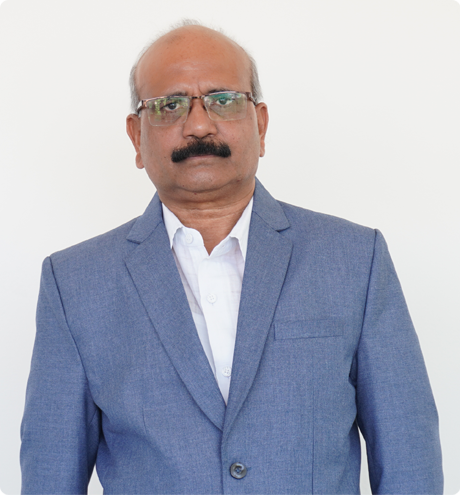
Dr. S B Brahmananda
Associate Professor & HOD
Qualification : M.Sc., Ph.D.
Experience : 15 year.
Specialization : Geology and Water Resource Engineering
Email Id : hodcivil@brindavancollege.com
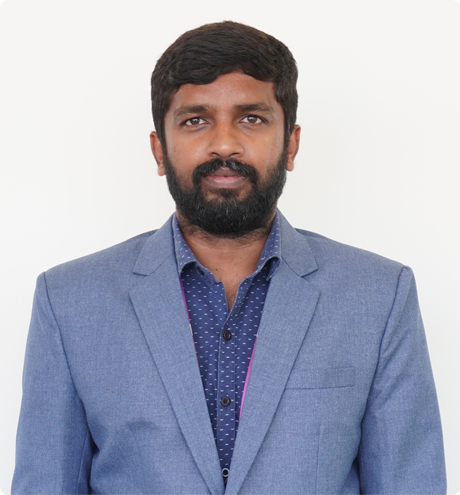
Prof. Madhu Kumar C.A.
Assistant Professor
Qualification : B.E, M.Tech, (PhD)
Experience : 10 years
Specialization : Structural Engineering
Email Id : madhukumarca644@brindavancollege.com
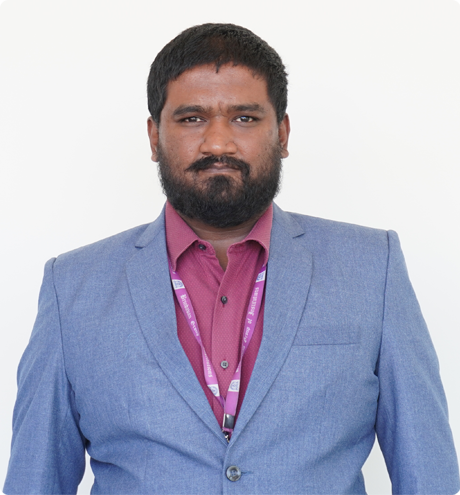
Prof. Prithviraj B. R.
Assistant Professor
Qualification : B.E., M.Tech, (PhD)
Experience : 7 years
Specialization : Transportation Engineering
Email Id : prithvibrce@brindavancollege.com
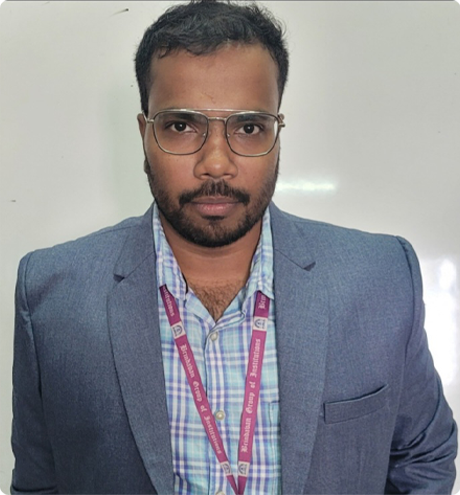
Prof. Ujjaini Shukla
Assistant Professor
Qualification : B.E., M.Tech
Experience : 5 years
Specialization : Environmental Engineering
Email Id : Shukla@brindavancollege.com

Prof. Mohammed Imran
Assistant Professor
Qualification : B.E., M.Tech, (PhD)
Experience : 10 years
Specialization : Structural Engineering
Email Id : md.imran.uni@brindavancollege.com
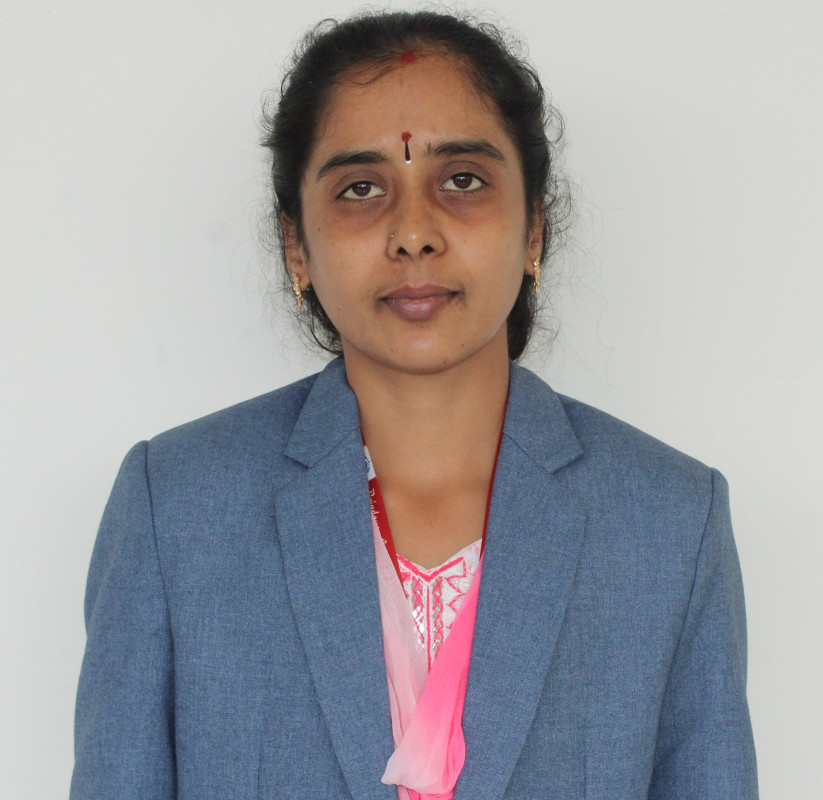
Prof. Manjula Bai
Assistant Professor
Qualification : M.TECH
Experience : 2
Specialization : Structural Engineering
Email Id : manjulak@brindavancollege.com
Area Of Interest : Structures